Justice weighs heavy — sometimes on the holster, sometimes on the soul.
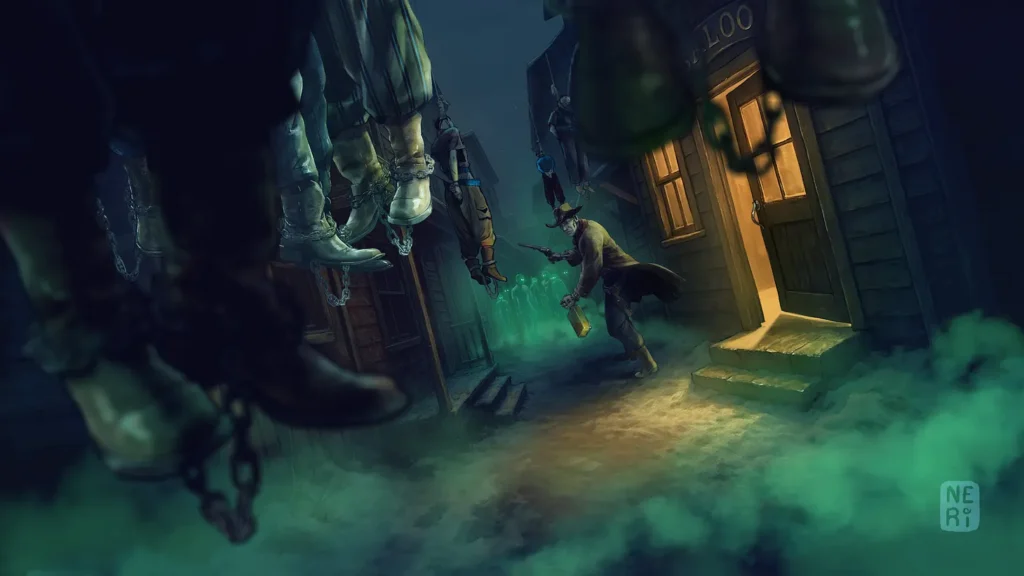
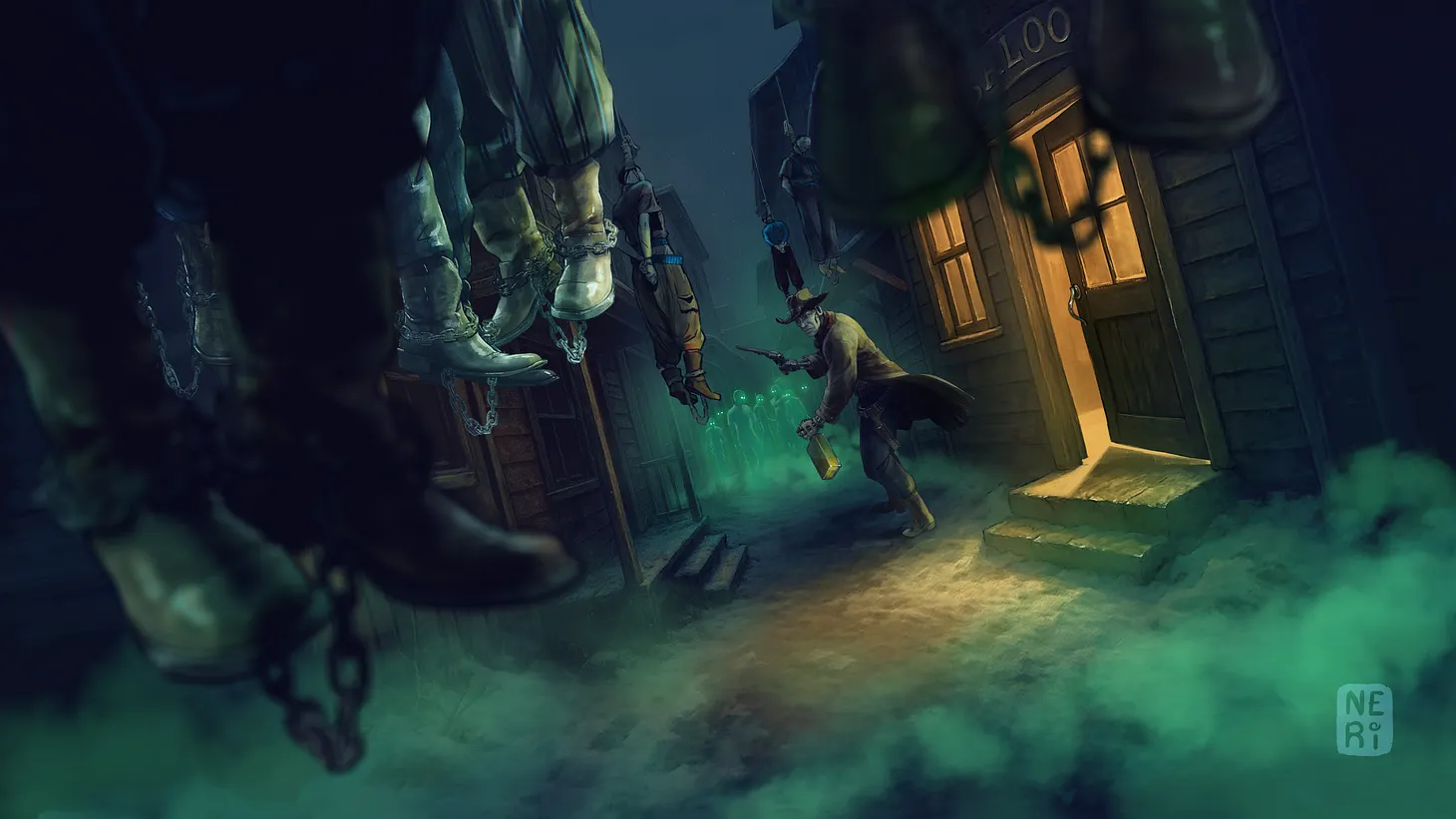
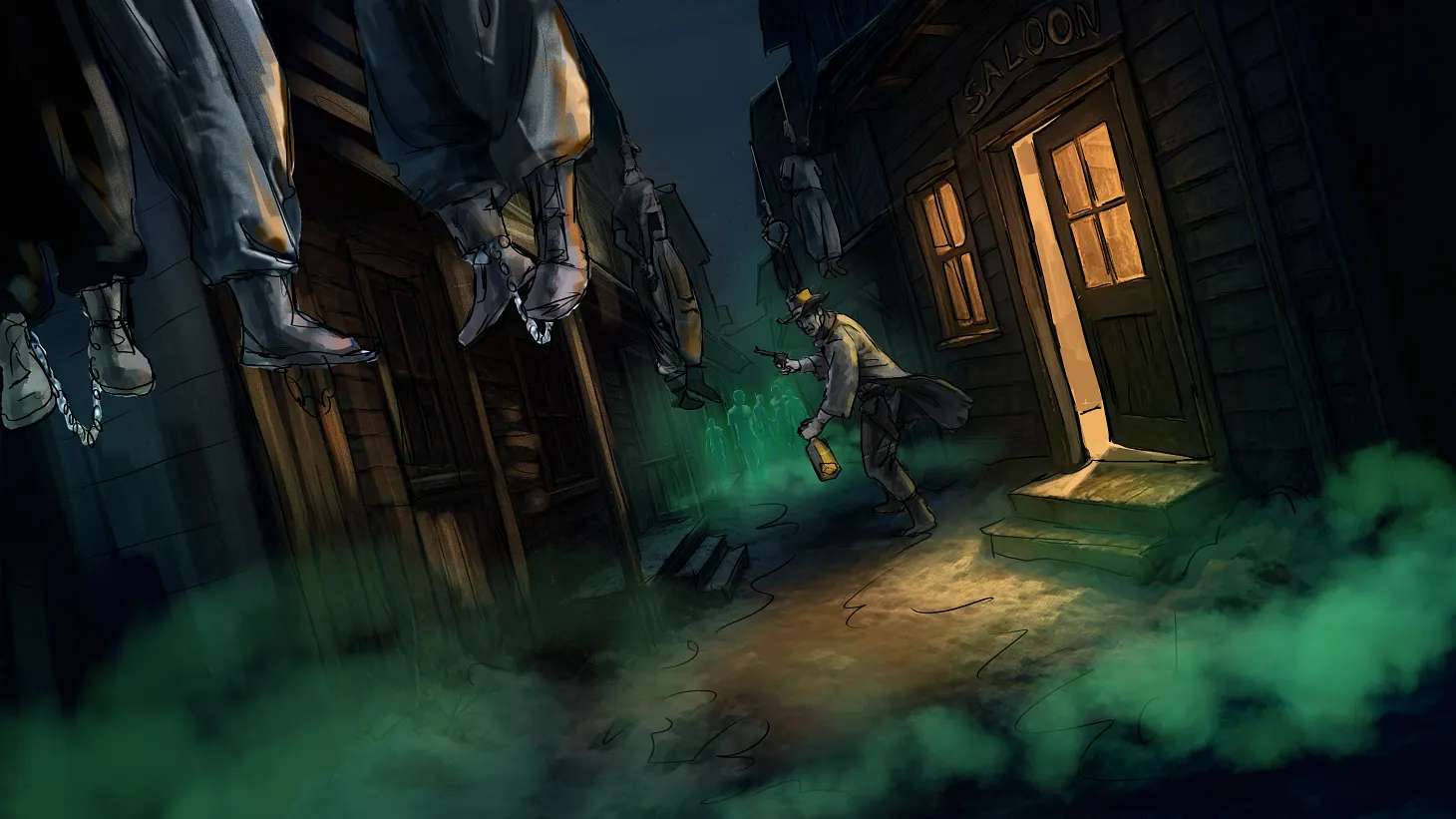
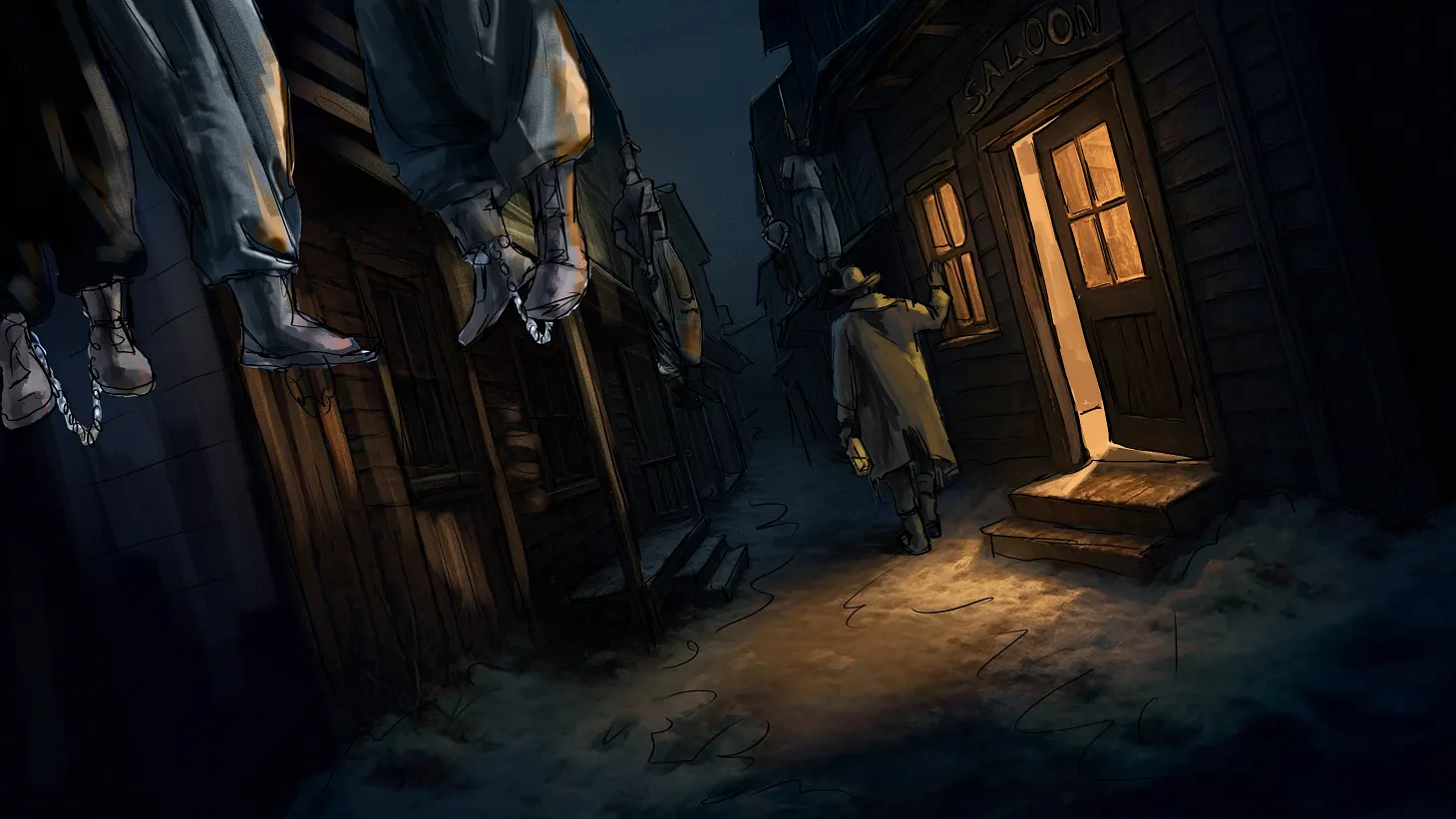
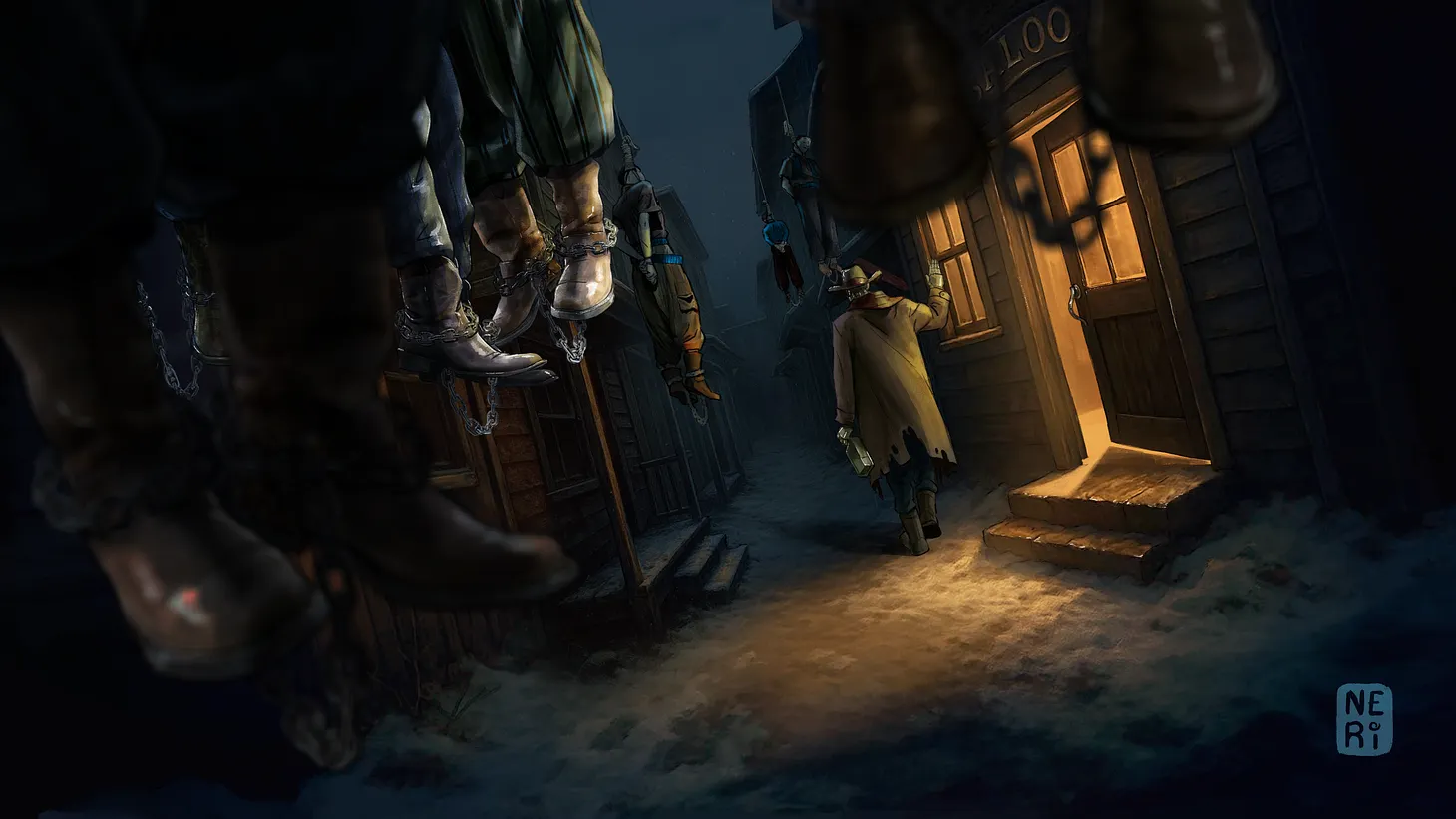
Instead of simply depicting Mudo leaving the saloon, I expanded the narrative by adding hanged criminals in the scene — a stark reminder of his role as the law’s enforcer and the burden that comes with it.
The narrow, snow-covered back alley becomes a metaphor for the hidden, dirty side of justice — the side only he faces. The contrast between the warm, lively saloon and the cold solitude outside reflects his fragile emotional state, worsened by alcohol.
In the second variant, I introduced the ghosts of the criminals he sentenced. Translucent, restless figures that heighten the psychological tension and visualize the guilt that follows him everywhere. The scene becomes richer, more symbolic, and more cinematic than the initial briefing suggested.
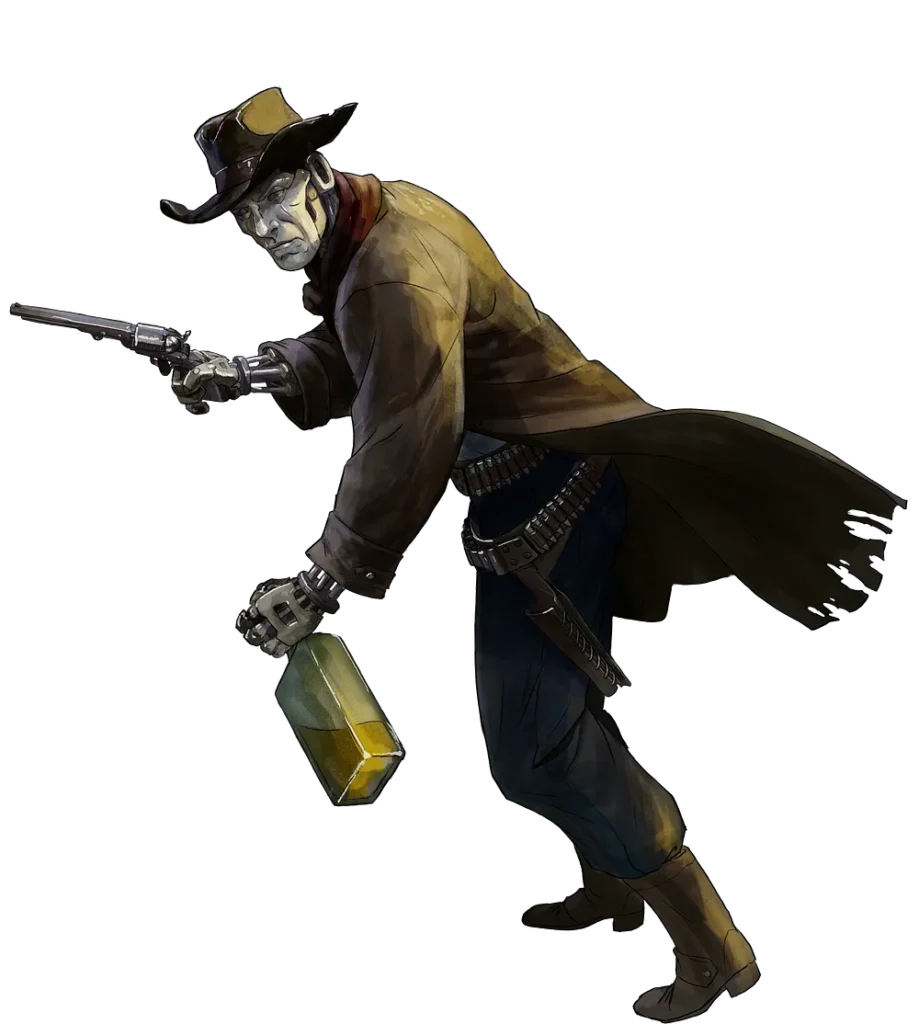
// Illustration created for the Tales from the Elsewhere series, reinterpreting the original briefing to deepen Mudo’s psychological and symbolic layers.